
𝗙𝗘𝗔𝗧𝗨𝗥𝗘 | 𝗕𝘂𝗶𝗹𝗱 𝗕𝗲𝘆𝗼𝗻𝗱 𝗖𝗹𝗮𝘀𝘀𝗿𝗼𝗼𝗺𝘀
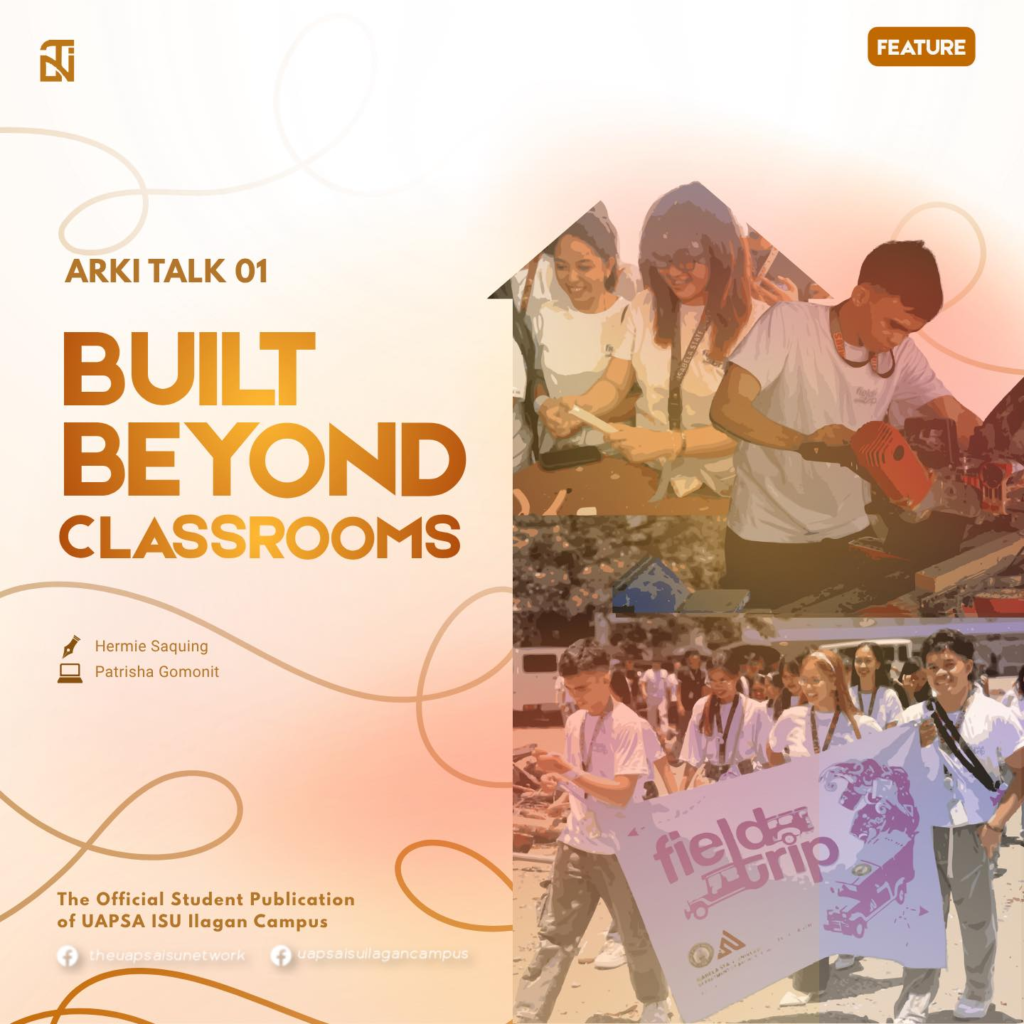
The usual sound of lectures and classroom discussions was replaced by the noise of ideas, tools, and real-world experiences as architecture students stepped into a different kind of learning during the ArkiTalk 01: TESDA Skill Seminar held yesterday. More than just a seminar, the event became a bridge between academic design and actual construction practices happening on-site every day.
From carpentry and plumbing to electrical systems and industrial training facilities, students were given a closer look at the technical side of the construction industry—something often seen only on plans and drawings.
The program formally opened through the initiative of the field trip subject spearheaded by Ar. Jefsie M. Antonio under the guidance of the Isabela State University – Ilagan Campus Architecture Department led by Ar. Blesie Joy M. Laguna. A welcome address was also delivered by Maria Elena A. Narcisco, Vocational School Superintendent, represented by Engr. Elmer A. Bartolome, who shared hopes that the collaboration between the Architecture Department and TESDA-ISAT faculty could soon become an annual partnership for future field trip programs.
But beyond the formalities, the heart of the event was found in the stories and experiences shared by the speakers themselves.
Students listened closely as Engr. Francisco B. Narag, Associate Professor III, discussed carpentry specializations and plumbing systems not through textbook definitions alone, but through real construction problems encountered on-site. Instead of romanticizing traditional construction methods, he showed students how the industry continues to evolve—particularly how modern construction now adapts more steel components instead of relying heavily on wood.
He also introduced the newly opened National Certificate (NC) III for steel construction, emphasizing the importance of adaptability in today’s fast-changing construction industry. For many students inside the venue, the discussion became a reminder that architecture and engineering are not only about designing structures, but also about understanding how they are physically built and sustained.
The seminar shifted from wood and steel to wires and circuits as Engr. Julius B. Baja, Instructor I, tackled the fundamentals of electrical systems. He discussed the basics of electrical layouting plans, the different types used in construction projects, and common on-site electrical problems together with practical solutions.
Rather than limiting the discussion to diagrams and symbols, the session felt grounded in actual field experiences. Students were exposed to the realities professionals face during installation, troubleshooting, and system planning—things often hidden behind finished walls and ceilings.
The learning did not stop inside the seminar hall.
Student delegates were later divided into two groups for a facility tour that showcased TESDA’s hands-on learning environment. One group visited the electrical training facilities where students were introduced to the “Industrial Motor Control System Trainer,” a research-developed training equipment by Engr. Elmer A. Bartolome. The facility demonstrated how trainees are immersed in industrial electrical systems through practical applications and simulations.
What caught the attention of many students was not only the equipment itself, but the opportunities connected to it. Bartolome explained how students can pursue technical training in electrical studies for three years, continue their fourth year in college, and still qualify to take the Electrical Engineering board examination. According to him, many of their former students are now licensed engineers working in the field today.
Meanwhile, the second group explored carpentry and plumbing training areas led by Engr. Francisco B. Narag, where student prototypes and plumbing materials were presented. Discussions focused on the differences between older plumbing materials and newer pipe technologies now used in modern construction. The showcase highlighted how innovation continuously changes even the smallest components of a building.
Yet perhaps the most important thing students brought home was not the technical information alone.
The seminar became proof that learning architecture is not confined to drafting tables, rendering software, or scale models. It also lives in workshops, electrical rooms, plumbing systems, steel frames, and construction sites where ideas are tested by reality.
Behind the success of the event were the efforts of the field trip committee and organizers who worked behind the scenes to make the program possible. Through collaboration, technical demonstrations, and shared experiences from professionals, ArkiTalk 01 became more than a school activity—it became a glimpse of the industry waiting beyond the classroom.
And for many students who attended, yesterday’s seminar did not simply teach skills. It showed the people, systems, and realities that keep every structure standing long after the drawings are finished.
[Correspondent : ISU-Ilagan Architecture Department]